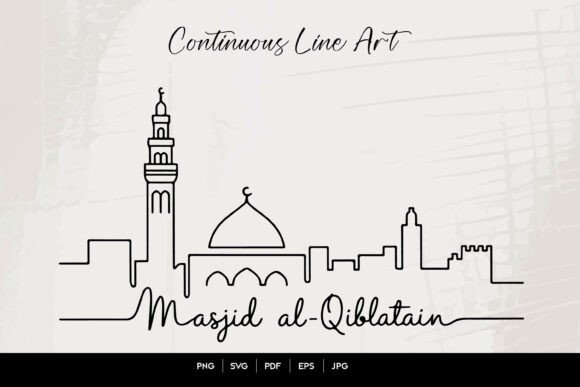
Masjid Al-Qiblatain Continuous Line Art Review for Real Projects
As an experienced embroidery designer and product reviewer, I’ve had the chance to work with countless digital designs—some shine in theory but fall flat in practice, while others surprise you with their adaptability. Today, I’m diving into Masjid Al-Qiblatain Continuous Line Art, a minimalist Islamic mosque illustration that promises simplicity without sacrificing meaning. Let’s see how it holds up when applied to real-world projects.
A Quietly Powerful First Impression
The first thing I noticed about Masjid Al-Qiblatain Continuous Line Art is its elegant restraint. This design uses a single continuous line to trace the silhouette of the mosque skyline—a bold architectural form simplified into a flowing, almost meditative pattern. The theme feels modern yet timeless, which makes it versatile across different styles and audiences.
Its layout is clean and balanced, with no unnecessary embellishments. The level of detail is subtle enough to avoid overwhelming small spaces but rich enough to feel intentional. It has a quiet visual personality: spiritual, serene, and subtly cultural. This kind of mood works well for thoughtful handmade products or personalized gifts where the design needs to speak volumes without being loud.
Real-Life Embroidery Performance
I tested this design on a few common embroidery project types to gauge its practicality. Here’s how it performed:
- Tote bag design: On a cotton canvas tote, the line art stitched cleanly with minimal distortion. It felt like a perfect accent for a reusable bag aimed at travelers or fans of Islamic architecture.
- Sweatshirt embroidery: Using a running stitch, the line followed the contours of the fabric smoothly. A bit of stabilizer helped keep the shape intact, especially in the more intricate sections of the minaret.
- Embroidered patch: As an applique design, it translated beautifully onto felt. The continuous line made it easy to frame with satin stitch borders, adding a soft dimensionality that elevated the overall look.
- Pillow cover: Stitched using a combination of running and fill stitches, it added just the right amount of texture and interest without overpowering the piece.
- Tea towel: The black-and-white version worked surprisingly well here. The contrast was strong enough to make the design pop, and it didn’t fade after a few washes.
What stood out was how adaptable the design felt. Whether I was imagining it as part of a nursery decor set or a boutique fashion accessory, it always maintained a sense of purpose and clarity. That’s not something every vector-based graphic can claim.
Where to Use with Care
Despite its strengths, there are some situations where this design might need extra attention:
- Small hoop sizes: The details in the arches and domes could get lost if the hoop is too tight. Always check the scale before committing.
- Textured or stretchy fabrics: On materials like knits or flannel, the fine lines may distort slightly. Testing on a sample swatch is key.
- Dark backgrounds: While the white-on-black effect looks beautiful in print, stitching it in light thread on dark fabric can reduce visibility. Consider using a contrasting color for better impact.
- Curved surfaces (e.g., caps): The design’s symmetry benefits from a flat surface. For curved areas, break it into segments or use a flexible stabilizer to prevent puckering.
- Frequent washing items: Because it’s a line-based design, thread tension and stabilizer choice become even more important to ensure longevity.
These aren’t deal-breakers, but they’re reminders that good design requires smart execution. The Masjid Al-Qiblatain Continuous Line Art is no exception.
Design Impact on Product Value and Customer Perception
This design adds a touch of sophistication and cultural relevance to any project. Its clean lines and recognizable silhouette give it strong brand consistency potential, making it ideal for Etsy sellers or small shop product lines that want to offer meaningful, unique items.
When used on a sweatshirt or tote bag, it enhances giftability. Customers often appreciate subtle, artistic designs over flashy ones—especially if they align with personal values or interests. The mosque illustration also brings a sense of professionalism and thoughtfulness to your handmade product, whether it’s for a client or your own collection.
From a branding perspective, the design’s visual identity supports commercial embroidery ventures. It’s easily scalable, recognizable from afar, and fits well into both traditional and contemporary aesthetics. Just be sure to test it in context before finalizing your production run.
Designer Notes for Optimal Use
Here are some practical tips to help you integrate Masjid Al-Qiblatain Continuous Line Art into your embroidery workflow effectively:
- Test on scrap fabric: Before moving to your final project, especially if it’s a custom apparel item or baby embroidery, stitch the design on a similar material to assess clarity and fit.
- Check thread color contrast: If using it on a dark fabric, opt for a lighter thread to maintain visibility. White or cream thread often gives the best results for high-contrast settings.
- Review stitch density: Since it’s a line-based illustration, avoid overly dense stitches unless you’re going for a raised or textured effect. Less is usually more with this style.
- Confirm hoop size: Larger hoop sizes will preserve the integrity of the design, especially for detailed parts like the qibla wall and minarets.
- Inspect small details: Zoom in on the SVG file to ensure that all elements translate well into stitch patterns. Tiny curves may require adjustments for smoothness.
- Use proper stabilizer: A tear-away or cut-away stabilizer is essential for stretchy or thin materials to prevent distortion.
- Test in black and white: This design is at its best in monochrome. Try converting it to grayscale in your software to visualize how it’ll look in different thread colors.
- Compare light and dark fabric backgrounds: See how the design interacts with each. Sometimes a dark background can enhance the elegance of a simple line drawing.
- Check licensing terms: If you plan to sell finished products or digital design assets, confirm that the license allows commercial use. Many free or low-cost graphics come with restrictions.
Perfect Fit for Thoughtful Craft Businesses
If you're an embroidery designer looking to expand your design assets, this illustration offers a fresh take on religious and cultural motifs. It’s not only suitable for personalized gifts and holiday embroidery, but it can also serve as a signature element in a themed collection—think Ramadan décor, Eid accessories, or travel-themed apparel.
For craft business owners and creative entrepreneurs, it’s a great candidate for printable mockups and digital product previews. Its minimalist nature ensures it won’t clash with other design elements, making it a reliable choice for layered embroidery or mixed-media projects.
Balancing Aesthetics and Practicality
One of the most impressive aspects of Masjid Al-Qiblatain Continuous Line Art is how it balances visual appeal with functional embroidery performance. It doesn’t demand heavy coverage or multiple colors, which means less time spent adjusting your machine and more time focusing on creative placement and presentation.
However, don’t let its simplicity fool you. This design still carries weight. It invites closer inspection and appreciation, which can boost buyer engagement and customer trust in your handmade shop or custom apparel offerings.
Final Thoughts for Makers and Merchants
In the world of machine embroidery design, sometimes the best illustrations are those that whisper rather than shout. Masjid Al-Qiblatain Continuous Line Art falls into that category. It's a design that respects the space it occupies and complements the product it adorns.
Whether you're creating a sweatshirt embroidery for your Etsy store or designing a mosque line motif for a boutique wedding gift, this graphic brings a refined aesthetic that stands out without being ostentatious. Just remember to consider fabric type, thread selection, and hoop size carefully.
For hobbyists and small-scale makers, it's a great addition to your portfolio of digital embroidery files. And for craft fair products or nursery decor, it offers a meaningful visual anchor that customers will notice—and remember.